
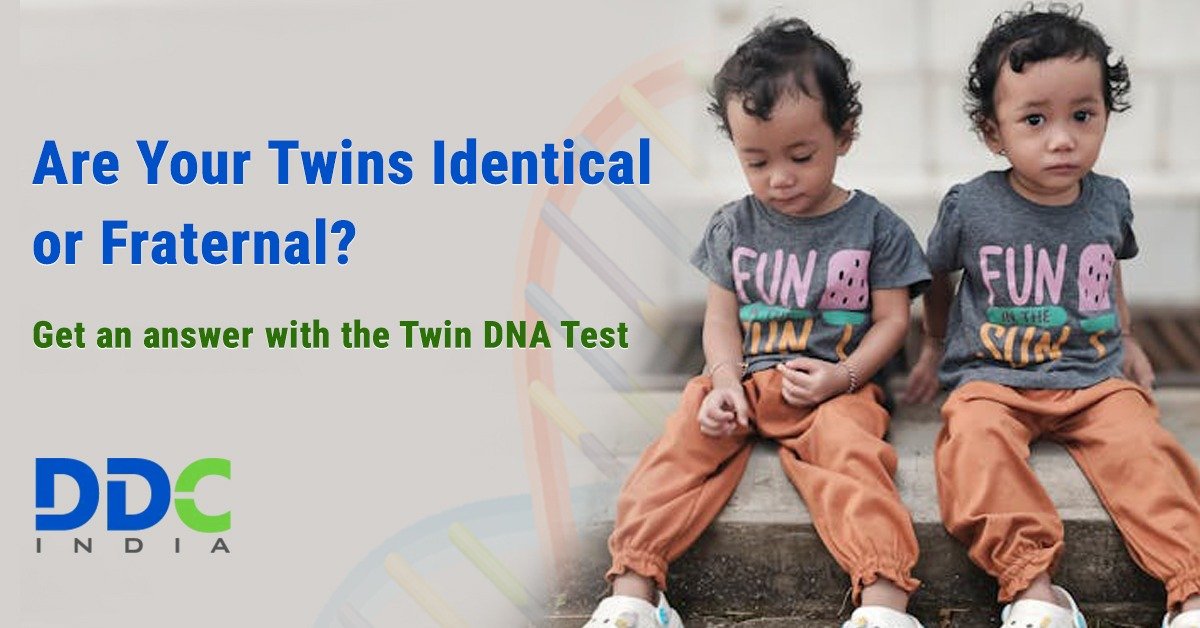
Many parents look at their twins and wonder if they are exactly the same or just very similar. You might notice small differences in their height or the way they smile. Sometimes, even doctors cannot tell for sure just by looking at the babies or the placenta after birth. This is why many families choose to get a twin DNA test to find the real answer. This simple check gives you the facts about your children’s genetic makeup and helps you understand their unique bond for the rest of their lives.
The Two Different Ways Twins Are Formed
To understand why you might need a test, it helps to know how twins are made. There are two main types that you should know about. The first type is called identical twins. These happen when one single egg is fertilized by one sperm. Shortly after this, the egg splits into two separate parts. Because they started from the same cell, these twins have the same genetic code. They will usually look very much alike and be of the same gender.
The second type is called fraternal twins. This happens when two different eggs are fertilized by two different sperm at the same time. You can think of them as siblings who just happened to grow in the womb at the same time. They only share about half of their genes, which is the same amount as any other brother or sister. They can be the same gender or different genders, and they might not look alike at all.
Read More: Legal Procedures For a DNA Test in India
Why Looking Alike Doesn’t Always Mean Your Twins Are Identical
You might think that if your twins look like mirror images, they must be identical. However, this is not always true. Some fraternal twins look so similar that even their own parents get them confused. On the other hand, some identical twins can look different because of how they grew before birth. One might have received more nutrients than the other, leading to differences in size or features.
Even the medical records from the hospital can sometimes be confusing. In the past, people thought that if twins had separate placentas, they were definitely fraternal. We now know that about one-third of identical twins actually have their own separate placentas. Because of this, looking at the birth details is not a 100% certain way to know the truth. Using a twin DNA test is the only way to get a clear and final answer that you can rely on.
A Simple Process Without Any Pain
You might worry that a genetic check involves needles or long hospital visits. The good news is that the process is very easy and can be done right in your own home. You do not need to take your children to a clinic or deal with any blood draws. The lab provides a kit that uses soft swabs, which look like long cotton buds. You simply rub the swab inside the cheek of each twin for about a minute.
This process collects skin cells that carry the genetic information needed for the check. It is completely painless and safe, even for newborn babies. Once you have collected the samples, you place them in the secure envelopes provided in the kit. You then mail them back to the laboratory for analysis. You will usually get your results in just a few business days, making it a quick way to solve the mystery.
The Importance of DNA Tests for Health Reasons
Finding out if your twins are identical is about much more than just satisfying your curiosity. There are very important health reasons to have this information. For example, if one twin ever needs a blood transfusion or a tissue transplant, an identical twin is a perfect match. Knowing this ahead of time can save precious minutes during a medical emergency.
Also, identical twins often share the same risks for certain health conditions. If one twin is diagnosed with a specific issue, you and your doctor will know to watch the other twin more closely. This allows for early treatment and better care. When you have the facts from a twin DNA test, you are better prepared to manage your children’s health as they grow up.
Why Choose DDC Laboratories India?
DDC Laboratories India has been providing accurate and reliable DNA tests for years. We’re known to be one of the most trustworthy labs for DNA testing services. Our team of experts utilize cutting edge technology with their years of experience for precise DNA testing procedures.
Moreover, we hold accreditations from NATA, IRCC, AABB, and MOJ, which makes our DNA test reports admissible in international embassies for sponsored immigration.
Every set of twins has a special story, and yours is no different. Whether they are identical or fraternal, they have a unique path ahead of them. Having the right information from a twin DNA test allows you to plan for their future with confidence.
It removes the guesswork and replaces it with proven facts that you can keep in your family records forever. If you want to know the truth about your children’s genetic bond, there is no better time than now to take the first step and order a twin DNA test.
For more information or to book a twin DNA test, call us at +91 8010177771. Alternatively, you can also send a message on WhatsApp at +91 9266615552.
Frequently Asked Questions
Q1. How accurate are twin DNA tests?
Ans: A twin DNA test, just like the other DNA tests, has an accuracy of 99.99%.
Q2. What is the process of ordering a twin DNA test online in India?
Ans: Call the experts of DDC Laboratories India and schedule an appointment for a twin DNA test for further biological clarity related to your twins.
Q3. How does a twin DNA test differ from a regular sibling DNA test?
Ans: A twin DNA test identifies if the twins share 100% or 50% DNA. While a siblingship test confirms whether the siblings are full or half-related.
Q4. What is the difference between identical and fraternal twins?
Ans: Identical twins form when a single egg splits into two eggs. Due to this, identical twins share 100% DNA. Fraternal twins form when two different eggs are fertilized by two different sperm. Fraternal twins share only 50% DNA.
Q5. How old do my twins need to be for a DNA test?
Ans: There’s no age limit on a DNA test, as it involves a safe and painless procedure called a buccal swab. A cotton swab is rubbed gently for a few seconds to collect the DNA samples.

